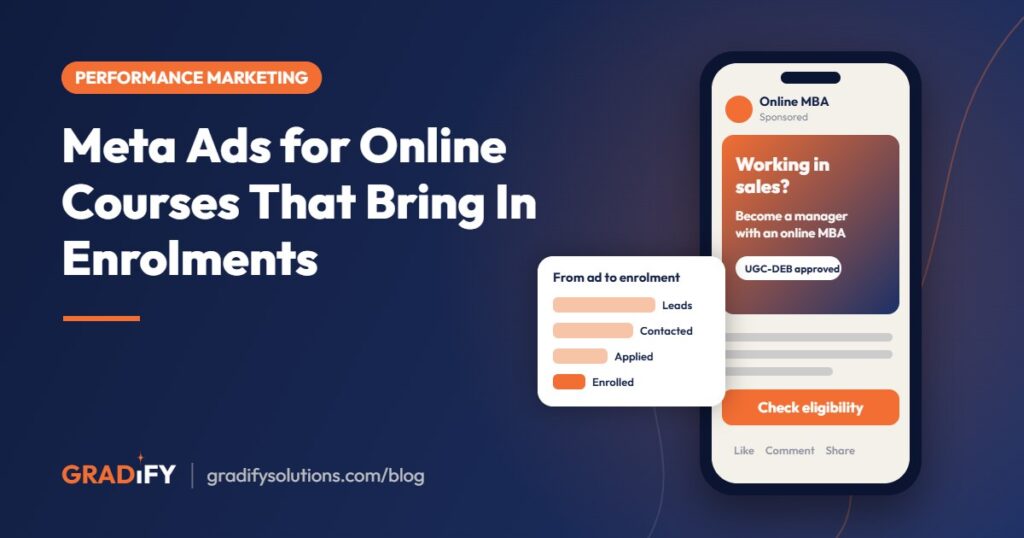
Meta ads for online courses can fill your counselling pipeline fast, or burn your budget on leads who never pick up the phone. The difference is rarely the targeting. It’s the creative. On Facebook and Instagram, the ad is the first conversation a prospective student has with your program, and it decides who clicks, who fills the form and who eventually enrols.
This guide covers the creative formats that bring in enrolments for online degree, certification and upskilling programs in India, how to set up Meta lead ads so the leads are worth calling, and how to measure what matters: cost per admission, not cost per lead.
Why most Meta ads for online courses attract the wrong leads
Meta’s algorithm optimises for whatever signal you give it. If you optimise for the cheapest lead form submissions, it finds people who fill in forms easily, not people who enrol. Generic creatives make this worse. A stock photo of a smiling graduate with “Admissions open!” attracts curiosity clicks from people who haven’t thought about fees, eligibility or the time an online program takes.
The fix is creative that pre-qualifies. A good EdTech ad tells the right person “this is for you” and quietly tells the wrong person “this isn’t”. You may get fewer leads, but more of them answer the counsellor’s call, apply and pay the fee.
7 Meta ad creatives that bring in enrolments
1. The outcome-first creative
Lead with the career result your learner wants, not the course name. “Working in sales? Move into a management role with an online MBA, without leaving your job” speaks to a specific person with a specific goal. Be concrete about roles and skills, and avoid guaranteed placement or salary claims you can’t back up. Education advertising in India is closely watched, and vague promises also attract low-intent clicks.
2. The “who it’s for” qualifier
Put eligibility in the first line of the ad: “For graduates with 2+ years of work experience” or “For Class 12 pass-outs planning a BBA”. This single line removes a large share of ineligible enquiries before they reach your counselling desk, which improves contact and application rates.
3. Real student and alumni video testimonials
Short vertical videos of 15 to 30 seconds, filmed on a phone, often outperform polished brand films. Let real learners talk about the things prospects worry about: weekend classes, how exams work, balancing study with a job. Add captions, because most people watch Reels and Stories on mute.
4. The fee and EMI transparency ad
Fees are one of the biggest silent objections in online education. An ad that says “Total fee ₹X, or from ₹Y a month with no-cost EMI” filters out people who can’t afford the program and reassures those who can. Counsellors spend less time on price objections, and your leads arrive already comfortable with the number.
5. The approval and credibility carousel
Use a carousel to answer the questions students always ask counsellors: Is the degree UGC-DEB approved? Which university awards it? Are exams online? Is it valid for government jobs and higher studies? Answering these in the ad builds trust and reduces drop-off later in the funnel.
6. The day-in-the-life schedule creative
For working professionals, the biggest fear is time. Show what a week looks like: recorded lectures on the app during the commute, a live class on Saturday morning, an assignment on Sunday. This makes the program feel achievable, and it attracts people who are ready to commit the hours.
7. The free webinar or trial class invitation
For colder audiences, asking for an application is too big a step. Invite them to a free career webinar or a trial class instead. Attendees are warmer leads for counsellors, and you can retarget them with testimonial and fee ads afterwards.
Quick creative checklist before you launch
- Does the first line say who the program is for?
- Is the career outcome specific and honest?
- Are fees, approval and study format visible, or one tap away?
- Does the video work with the sound off, in a 9:16 vertical format?
- Is there one clear call to action, such as “Check eligibility” rather than “Learn more”?
Set up Meta lead ads so the leads are worth calling
Great creative can still produce poor leads if the form is too easy. A few settings make a big difference:
- Choose the “higher intent” form type. The review screen asks people to confirm their details, which cuts accidental and fake submissions.
- Add two or three qualifying questions. Highest qualification, years of work experience and preferred intake are enough to route leads and prioritise calls.
- Send leads to your CRM instantly. Downloading CSV files once a day means calling leads hours after they enquired. Connect Meta to your CRM or dialer, and call within minutes.
- Remove duplicates and junk before counselling. AI lead qualification checks every enquiry for duplicates, wrong numbers and course fit, so counsellors call the best leads first.
- Send results back to Meta. Use the Conversions API to report which leads became applications and admissions. Meta then learns to find more people like your enrolled students, not just more form-fillers.
Targeting that supports your creative
With strong, qualifying creative, broad targeting often works well, because the ad itself does the filtering. Build lookalike audiences from your list of enrolled students rather than all leads, exclude current students and recent applicants, and run separate campaigns for each program so budgets and creatives stay focused. Retarget website visitors and video viewers with testimonial and fee ads, since they already know your brand.
Measure cost per admission, not cost per lead
The cheapest leads are rarely the best. Judge every creative on what happens after the form: how many leads were contacted, applied and enrolled. A creative with a higher cost per lead but twice the enrolment rate is the better ad. Test creatives in pairs, give each enough leads to reach counselling outcomes, and switch off ads that produce cheap leads nobody can reach.
Not sure what your real number is? Use our free cost per admission calculator to work out your CPL, cost per admission and the lead budget you need for your next intake.
When to buy leads instead of running ads yourself
Meta campaigns need time to learn, a steady supply of fresh creatives, a connected CRM and a fast calling team. If your intake is weeks away, or you want to fill gaps between campaigns, buying leads can be faster and more predictable. Gradify’s online degree lead generation service supplies course-wise, high-intent leads from Google, Meta and trusted aggregators, priced to your target cost per admission, with exclusive or shared options to match your counselling capacity.
Get Meta ads and leads that fill your intake
Gradify Solutions helps universities and EdTech brands turn Facebook and Instagram ads for education into enrolled students. We plan and produce the creatives, set up lead forms and CRM integration, and optimise for cost per admission through our performance marketing for EdTech. If you need leads now, we can supply them directly.
Ready to grow your enrolments? Get high-intent online course leads → or request a free strategy call using the form below.